Buy picfront.us ?
We are moving the project
picfront.us .
Are you interested in purchasing the domain
picfront.us ?
domain@kv-gmbh.de · 0541-91531010
Buy picfront.us ?
Why does the image become blurry when magnifying with a microscope?
When magnifying an image with a microscope, the image can become blurry due to the limitations of the microscope's optics and the physics of light. As the magnification increases, the depth of field decreases, making it more difficult to keep the entire image in focus. Additionally, the quality of the microscope's lenses and the amount of light available can also affect the clarity of the image. These factors can lead to a loss of sharpness and detail, resulting in a blurry image at higher magnifications. **
What is the difference between a magnifying glass and a microscope?
A magnifying glass is a simple optical device that uses a single lens to magnify objects, typically used for viewing small details such as text or small objects. On the other hand, a microscope is a more complex optical instrument that uses multiple lenses and a light source to magnify and visualize tiny objects at a much higher level of detail, often used for scientific research and medical diagnosis. Microscopes also have the ability to magnify objects to a much greater extent than a magnifying glass. **
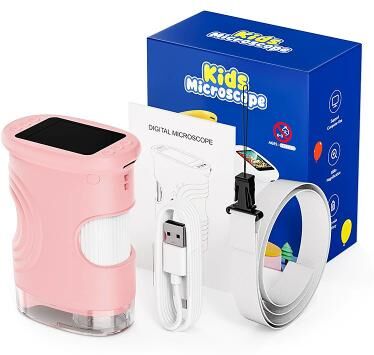

Similar search terms for LightInthebox-4K-Microscope-Magnifying
Top-Angebote
Products related to LightInthebox-4K-Microscope-Magnifying:
-
Uplift Essentials 8MP 4K WiFi Dual Lens Solar Security Camera 8mp Wifi CameraProtect your property with sustainable energy using the 8MP 4K WiFi Solar Camera. This highperformance Wireless CCTV Surveillance Camera features an integrated Solar Panel, providing continuous power without the need for complex wiring or external...338,97 $*Shipping: 0,00 $Secure redirect to the provider
-
eufy Security PoE CCTV Camera System E50, 4K Dual-Lens, Bullet-PTZ Camera𝗛𝘆𝗯𝗿𝗶𝗱 𝗕𝘂𝗹𝗹𝗲𝘁-𝗣𝗧𝗭 𝗗𝘂𝗮𝗹-𝗟𝗲𝗻𝘀 𝗖𝗮𝗺𝗲𝗿𝗮: The upper 2K wide-angle lens delivers a 122° fixed view of the area, while the lower 4K Pan-Tilt-Zoom tracks 360° for complete coverage and features 5× auto-zoom to capture details up to 20 m away. 𝗲𝘂𝗳𝘆 𝗢𝗺𝗻𝗶𝗧𝗿𝗮𝗰𝗸 𝗙𝗼𝗰𝘂𝘀𝗲𝘀 𝗼𝗻 𝗪𝗵𝗮𝘁 𝗠𝗮𝘁𝘁𝗲𝗿𝘀: When the bullet cam detects activity, the Pan-Tilt-Zoom cam locks on and auto-tracks them, keeping the action centred with intelligent auto-framing. 𝗟𝗶𝘃𝗲 𝗖𝗿𝗼𝘀𝘀-𝗖𝗮𝗺 𝗧𝗿𝗮𝗰𝗸𝗶𝗻𝗴: Advanced cross-camera tracking seamlessly follows the action across multiple cameras when used with eufy NVR. 𝗢𝗻-𝗗𝗲𝘃𝗶𝗰𝗲 𝗔𝗜 𝗔𝗴𝗲𝗻𝘁: Upgrade to smart, real-time security with a local AI agent that enables instant analysis, genuine threat identification, and decisive action for secure, cloud-free security that's completely subscription-free. Customisable No-Go Zones and alerts empower your security system to accurately detect real danger and ensure tailored responses. 𝟮𝟰/𝟳 𝗥𝗲𝗰𝗼𝗿𝗱𝗶𝗻𝗴, 𝗘𝘅𝗽𝗮𝗻𝗱𝗮𝗯𝗹𝗲 𝗦𝗲𝗰𝘂𝗿𝗶𝘁𝘆: The 8-port NVR supports up to 8 cameras and is expandable to 16 channels via a PoE switch. Supports HDD storage up to 16TB for continuous 24/7 local recording. Add more eufy PoE cameras to expand wired coverage, or connect Wi-Fi cameras via eufy Wi-Fi Module (sold separately) to expand your coverage. 𝗘𝗳𝗳𝗲𝗰𝘁𝗶𝘃𝗲 𝗥𝗲𝗱 𝗮𝗻𝗱 𝗕𝗹𝘂𝗲 𝗟𝗶𝗴𝗵𝘁 𝗗𝗲𝘁𝗲𝗿𝗿𝗲𝗻𝗰𝗲: High-intensity warning lights activate when threats are detected, offering a stronger deterrent than standard white spotlights. 𝗘𝗮𝘀𝘆 𝗦𝗲𝘁𝘂𝗽: Just one network cable connects each eufy PoE camera to the NVR for power and video, making setup a breeze. Compatible with Alexa and Google Assistant. Note: To connect eufy PoE Cam E50 to eufy NVR S4 (T8N00), update NVR S4 firmware to V4.2.2.8 or above.849,00 £*Shipping: 0,00 £Secure redirect to the provider
-
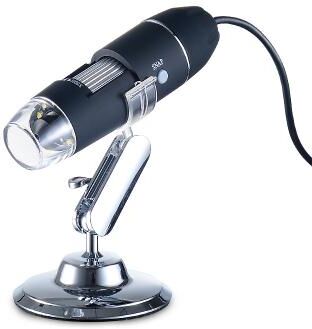
LightInthebox 500X 1000X 1600X Digital Microscope Camera 3in1 Type-C USB Portable Electronic Microscope For Soldering LED Magnifier For Cell Phone Repair(not for iphone)Model:X4S; Camera Pixels:640p; Resolution:640; LED Beads Quantity:1; Magnification:1000X; Type:Microscope; AC Voltage:5; Features:Easy to operate; Listing Date:04/07/202326,69 $*Shipping: 6,63 $Secure redirect to the provider


-
How do you compare the light paths of a magnifying glass and a compound microscope?
Both a magnifying glass and a compound microscope use lenses to bend light rays in order to magnify an object. However, a magnifying glass has a single lens that produces a magnified virtual image that can be seen by the naked eye. On the other hand, a compound microscope uses multiple lenses to produce a magnified real image that is then further magnified by the eyepiece. This allows for much higher magnification and resolution compared to a magnifying glass. **
-
How do you compare the paths of light in a magnifying glass and a compound microscope?
The paths of light in a magnifying glass and a compound microscope are similar in that they both use lenses to bend and focus light. In a magnifying glass, the light passes through a single convex lens, which causes the light rays to converge and form a magnified image. In a compound microscope, the light passes through multiple lenses, including an objective lens and an eyepiece, which work together to magnify the image. Additionally, the compound microscope often includes a mirror or light source to illuminate the specimen being viewed. Overall, both the magnifying glass and compound microscope use lenses to manipulate light in order to magnify and focus an image. **
-
What is the resolution capacity of the human eye compared to a microscope and a magnifying glass?
The human eye has a resolution capacity of about 0.2 mm, which means it can distinguish two points that are at least 0.2 mm apart. In comparison, a microscope can have a resolution capacity of around 0.2 micrometers, allowing it to distinguish two points that are only 0.2 micrometers apart. A magnifying glass falls in between, with a resolution capacity better than the human eye but not as high as a microscope, typically around 0.1 mm. **
-
What is the resolving power of the human eye compared to a microscope and a magnifying glass?
The resolving power of the human eye is limited to about 0.2 mm, which means it can distinguish two points that are at least 0.2 mm apart. In comparison, a microscope has a much higher resolving power, typically around 0.2 micrometers, allowing it to distinguish smaller details. A magnifying glass falls in between, with a resolving power better than the human eye but not as high as a microscope, typically around 0.1 mm. **

Which microscope is a nano-microscope?
A nano-microscope is a type of microscope that is capable of imaging objects at the nanoscale, which is on the order of billionths of a meter. One example of a nano-microscope is the scanning tunneling microscope (STM), which uses a sharp metal tip to scan the surface of a sample and create a detailed image of its atomic structure. Another example is the atomic force microscope (AFM), which uses a sharp tip to measure forces between the tip and the sample surface, allowing for high-resolution imaging of nanoscale features. Both of these microscopes are capable of imaging at the nanoscale and are therefore considered nano-microscopes. **
How do I return something at Lightinthebox?
To return an item at Lightinthebox, you will need to first log in to your account and go to the "My Orders" section. Find the order that contains the item you want to return and click on "Return & Refund" to start the return process. Follow the instructions to select the item you want to return and the reason for the return. After submitting the return request, you will receive further instructions on how to send the item back and receive a refund or exchange. **
Top-Angebote
Products related to LightInthebox-4K-Microscope-Magnifying:
-
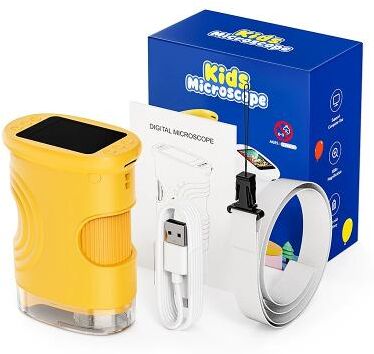
LightInthebox 4K Microscope, Magnifying Glass with Light, Microscope, 4K Magnifying Camera, 2-inch IPS Screen, 1000x Handheld Portable USB Digital Mini TelescopeResolution:1080P; LED Beads Quantity:8; Magnification:1000X; Type:Microscope; AC Voltage:5V; Listing Date:09/02/202653,99 $*Shipping: 7,90 $Secure redirect to the provider
-
Inspire Select 500X Auto Focus Digital Microscope Portable 2MP Electronic Magnifying Glass For Jewelry & Watch Repair 500X Auto Focus Digital Microscope Portable 2MP Electronic Magnifying Glass For Jewelry & Watch RepairExplore tiny details with stunning clarity using this portable digital microscope designed for hobbyists, students, collectors, and repair professionals. Featuring 500X magnification and a highdefinition 2MP camera, this electronic magnifying glass...159,98 $*Shipping: 0,00 $Secure redirect to the provider
-
Uplift Essentials 8MP 4K WiFi Dual Lens Solar Security Camera 8mp Wifi CameraProtect your property with sustainable energy using the 8MP 4K WiFi Solar Camera. This highperformance Wireless CCTV Surveillance Camera features an integrated Solar Panel, providing continuous power without the need for complex wiring or external...338,97 $*Shipping: 0,00 $Secure redirect to the provider
-
Why does the image become blurry when magnifying with a microscope?
When magnifying an image with a microscope, the image can become blurry due to the limitations of the microscope's optics and the physics of light. As the magnification increases, the depth of field decreases, making it more difficult to keep the entire image in focus. Additionally, the quality of the microscope's lenses and the amount of light available can also affect the clarity of the image. These factors can lead to a loss of sharpness and detail, resulting in a blurry image at higher magnifications. **
-
What is the difference between a magnifying glass and a microscope?
A magnifying glass is a simple optical device that uses a single lens to magnify objects, typically used for viewing small details such as text or small objects. On the other hand, a microscope is a more complex optical instrument that uses multiple lenses and a light source to magnify and visualize tiny objects at a much higher level of detail, often used for scientific research and medical diagnosis. Microscopes also have the ability to magnify objects to a much greater extent than a magnifying glass. **
-
How do you compare the light paths of a magnifying glass and a compound microscope?
Both a magnifying glass and a compound microscope use lenses to bend light rays in order to magnify an object. However, a magnifying glass has a single lens that produces a magnified virtual image that can be seen by the naked eye. On the other hand, a compound microscope uses multiple lenses to produce a magnified real image that is then further magnified by the eyepiece. This allows for much higher magnification and resolution compared to a magnifying glass. **
-
How do you compare the paths of light in a magnifying glass and a compound microscope?
The paths of light in a magnifying glass and a compound microscope are similar in that they both use lenses to bend and focus light. In a magnifying glass, the light passes through a single convex lens, which causes the light rays to converge and form a magnified image. In a compound microscope, the light passes through multiple lenses, including an objective lens and an eyepiece, which work together to magnify the image. Additionally, the compound microscope often includes a mirror or light source to illuminate the specimen being viewed. Overall, both the magnifying glass and compound microscope use lenses to manipulate light in order to magnify and focus an image. **
Similar search terms for LightInthebox-4K-Microscope-Magnifying
-
eufy Security PoE CCTV Camera System E50, 4K Dual-Lens, Bullet-PTZ Camera𝗛𝘆𝗯𝗿𝗶𝗱 𝗕𝘂𝗹𝗹𝗲𝘁-𝗣𝗧𝗭 𝗗𝘂𝗮𝗹-𝗟𝗲𝗻𝘀 𝗖𝗮𝗺𝗲𝗿𝗮: The upper 2K wide-angle lens delivers a 122° fixed view of the area, while the lower 4K Pan-Tilt-Zoom tracks 360° for complete coverage and features 5× auto-zoom to capture details up to 20 m away. 𝗲𝘂𝗳𝘆 𝗢𝗺𝗻𝗶𝗧𝗿𝗮𝗰𝗸 𝗙𝗼𝗰𝘂𝘀𝗲𝘀 𝗼𝗻 𝗪𝗵𝗮𝘁 𝗠𝗮𝘁𝘁𝗲𝗿𝘀: When the bullet cam detects activity, the Pan-Tilt-Zoom cam locks on and auto-tracks them, keeping the action centred with intelligent auto-framing. 𝗟𝗶𝘃𝗲 𝗖𝗿𝗼𝘀𝘀-𝗖𝗮𝗺 𝗧𝗿𝗮𝗰𝗸𝗶𝗻𝗴: Advanced cross-camera tracking seamlessly follows the action across multiple cameras when used with eufy NVR. 𝗢𝗻-𝗗𝗲𝘃𝗶𝗰𝗲 𝗔𝗜 𝗔𝗴𝗲𝗻𝘁: Upgrade to smart, real-time security with a local AI agent that enables instant analysis, genuine threat identification, and decisive action for secure, cloud-free security that's completely subscription-free. Customisable No-Go Zones and alerts empower your security system to accurately detect real danger and ensure tailored responses. 𝟮𝟰/𝟳 𝗥𝗲𝗰𝗼𝗿𝗱𝗶𝗻𝗴, 𝗘𝘅𝗽𝗮𝗻𝗱𝗮𝗯𝗹𝗲 𝗦𝗲𝗰𝘂𝗿𝗶𝘁𝘆: The 8-port NVR supports up to 8 cameras and is expandable to 16 channels via a PoE switch. Supports HDD storage up to 16TB for continuous 24/7 local recording. Add more eufy PoE cameras to expand wired coverage, or connect Wi-Fi cameras via eufy Wi-Fi Module (sold separately) to expand your coverage. 𝗘𝗳𝗳𝗲𝗰𝘁𝗶𝘃𝗲 𝗥𝗲𝗱 𝗮𝗻𝗱 𝗕𝗹𝘂𝗲 𝗟𝗶𝗴𝗵𝘁 𝗗𝗲𝘁𝗲𝗿𝗿𝗲𝗻𝗰𝗲: High-intensity warning lights activate when threats are detected, offering a stronger deterrent than standard white spotlights. 𝗘𝗮𝘀𝘆 𝗦𝗲𝘁𝘂𝗽: Just one network cable connects each eufy PoE camera to the NVR for power and video, making setup a breeze. Compatible with Alexa and Google Assistant. Note: To connect eufy PoE Cam E50 to eufy NVR S4 (T8N00), update NVR S4 firmware to V4.2.2.8 or above.849,00 £*Shipping: 0,00 £Secure redirect to the provider
-
LightInthebox 500X 1000X 1600X Digital Microscope Camera 3in1 Type-C USB Portable Electronic Microscope For Soldering LED Magnifier For Cell Phone Repair(not for iphone)Model:X4S; Camera Pixels:640p; Resolution:640; LED Beads Quantity:1; Magnification:1000X; Type:Microscope; AC Voltage:5; Features:Easy to operate; Listing Date:04/07/202326,69 $*Shipping: 6,63 $Secure redirect to the provider
-
LightInthebox 4K Microscope, Magnifying Glass with Light, Microscope, 4K Magnifying Camera, 2-inch IPS Screen, 1000x Handheld Portable USB Digital Mini TelescopeResolution:1080P; LED Beads Quantity:8; Magnification:1000X; Type:Microscope; AC Voltage:5V; Listing Date:09/02/202653,99 $*Shipping: 7,90 $Secure redirect to the provider
-
What is the resolution capacity of the human eye compared to a microscope and a magnifying glass?
The human eye has a resolution capacity of about 0.2 mm, which means it can distinguish two points that are at least 0.2 mm apart. In comparison, a microscope can have a resolution capacity of around 0.2 micrometers, allowing it to distinguish two points that are only 0.2 micrometers apart. A magnifying glass falls in between, with a resolution capacity better than the human eye but not as high as a microscope, typically around 0.1 mm. **
-
What is the resolving power of the human eye compared to a microscope and a magnifying glass?
The resolving power of the human eye is limited to about 0.2 mm, which means it can distinguish two points that are at least 0.2 mm apart. In comparison, a microscope has a much higher resolving power, typically around 0.2 micrometers, allowing it to distinguish smaller details. A magnifying glass falls in between, with a resolving power better than the human eye but not as high as a microscope, typically around 0.1 mm. **
-
Which microscope is a nano-microscope?
A nano-microscope is a type of microscope that is capable of imaging objects at the nanoscale, which is on the order of billionths of a meter. One example of a nano-microscope is the scanning tunneling microscope (STM), which uses a sharp metal tip to scan the surface of a sample and create a detailed image of its atomic structure. Another example is the atomic force microscope (AFM), which uses a sharp tip to measure forces between the tip and the sample surface, allowing for high-resolution imaging of nanoscale features. Both of these microscopes are capable of imaging at the nanoscale and are therefore considered nano-microscopes. **
-
How do I return something at Lightinthebox?
To return an item at Lightinthebox, you will need to first log in to your account and go to the "My Orders" section. Find the order that contains the item you want to return and click on "Return & Refund" to start the return process. Follow the instructions to select the item you want to return and the reason for the return. After submitting the return request, you will receive further instructions on how to send the item back and receive a refund or exchange. **
* All prices are inclusive of VAT and, if applicable, plus shipping costs. The offer information is based on the details provided by the respective shop and is updated through automated processes. Real-time updates do not occur, so deviations can occur in individual cases. ** Note: Parts of this content were created by AI.